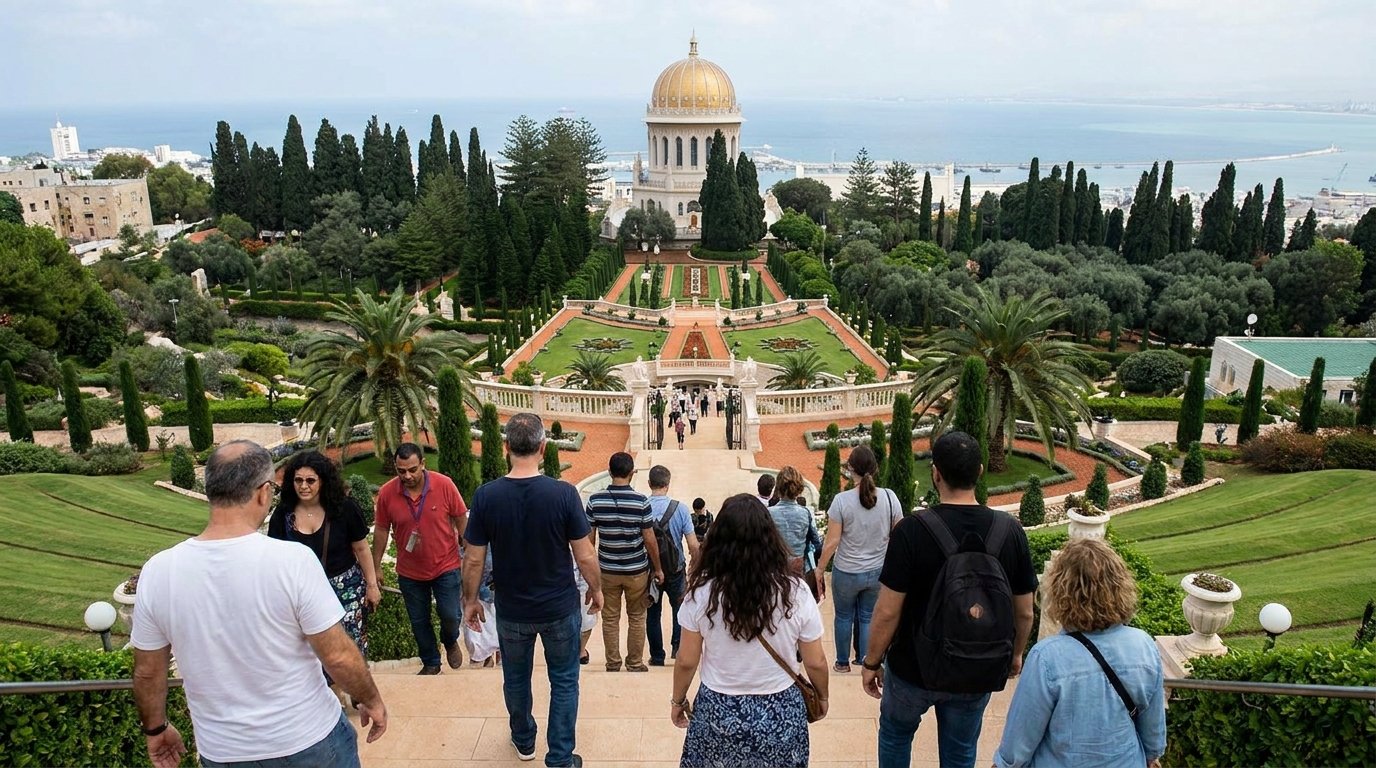
We invite you to investigate the truth of the Baháʼí Faith to see if it captures your heart. The Baháʼí Faith is religion often described as both ancient in its spiritual roots and modern in its vision for humanity. We find ourselves drawn to its message of unity, its emphasis on the interconnectedness of all people, and its commitment to peace and justice. This overview aims to provide a foundational understanding of its core principles, its history, and its impact on individuals and society. We believe that by understanding the Baháʼí Faith, we can gain valuable insights into the diverse tapestry of human spirituality and the ongoing quest for a more harmonious world.
The Bahá’í Faith emphasizes the importance of prayer and spiritual connection, which is beautifully illustrated in the collection of special tablets. For those interested in exploring the significance of these prayers and their role in the Bahá’í community, you can read more in this related article: Special Tablets in the Bahá’í Faith. This resource provides insights into the various prayers and their meanings, highlighting the spiritual practices that unite Bahá’ís around the world.
The Essence of Unity: Core Baháʼí Principles
At the very core of the Baháʼí Faith lies an unwavering belief in the fundamental unity of God, the unity of religions, and the unity of humankind. This triad of unity forms the bedrock of Baháʼí teachings and permeates every aspect of their spiritual and social life. For us, this emphasis on unity is not merely an abstract ideal; it’s a practical roadmap for overcoming the divisions that plague our world.
The Oneness of God
We understand the Baháʼí concept of the Oneness of God as a transcendent, unknowable essence, the source of all existence. While different religions may use different names or attribute different characteristics to the Divine, Baháʼís believe they all worship the same God. This understanding fosters a profound respect for all divinely revealed religions, seeing them as successive stages in God’s unfolding plan for humanity.
Progressive Revelation
A key aspect of this belief is the principle of progressive revelation. We learn that God has sent a series of divine messengers, or Manifestations, throughout history to guide humanity. These include figures such as Abraham, Moses, Buddha, Zoroaster, Jesus Christ, Muhammad, and the Báb. Each Manifestation brought teachings relevant to their time and place, progressively unfolding God’s will and guiding humanity towards greater understanding and spiritual maturity. The Baháʼí Faith views Baháʼu’lláh as the most recent Manifestation for this age, fulfilling the prophecies of past religions and ushering in a new era of global unity.
The Source of All Creation
This belief in one God is not about a distant, impersonal force, but rather a loving Creator who is actively involved in the guidance of humanity. We are taught that God’s love is encompassing and that His purpose in creation is for humanity to know and worship Him, and to draw closer to Him. This concept provides a sense of purpose and meaning, assuring us that there is an overarching divine plan at work.
The Unity of Religions
The Baháʼí Faith’s assertion of the unity of religions is perhaps one of its most distinctive and challenging teachings. We are encouraged to see the common spiritual truths that bind together the world’s great faiths, rather than focusing on their apparent differences. This perspective shifts our understanding from religious exclusivity to a recognition of the shared divine origin and purpose of spiritual traditions.
Shared Ethical and Moral Teachings
We observe that, despite outward differences in ritual and dogma, the core ethical and moral teachings of major religions are remarkably consistent. Concepts like love, compassion, justice, honesty, and kindness are universal spiritual values. The Baháʼí Faith emphasizes these shared foundations, inviting us to build bridges of understanding between different faith communities.
The Advancement of Human Society
From a Baháʼí perspective, each Manifestation of God came to advance human society at a particular stage of its development. Just as a child learns progressively, so too has humanity’s spiritual and social understanding evolved over time. The Baháʼí Faith sees itself as the latest stage in this divinely guided progression, offering teachings that are relevant to the challenges and opportunities of our interconnected global age.
The Unity of Humankind
This principle is the cornerstone of Baháʼí social teachings and a driving force behind their global community. The Baháʼí Faith proclaims the inherent oneness of all people, regardless of race, religion, nationality, gender, or social standing. We are all leaves of one tree, flowers of one garden.
Eradication of Prejudice
The Baháʼí Faith actively works to dismantle all forms of prejudice. This includes racial prejudice, religious intolerance, gender inequality, and all other artificial barriers that divide humanity. We are taught that the elimination of prejudice is essential for the establishment of lasting world peace.
Equality of Men and Women
The Baháʼí Faith is a staunch advocate for the full equality of men and women. It teaches that humanity is like a bird with two wings, and it cannot fly with full strength and beauty unless both wings are equally developed. This principle is not just about legal or social equality, but a deep spiritual understanding that both men and women are endowed with equal spiritual capacities and play equally vital roles in the advancement of civilization.
Universal Education
The Baháʼí Faith emphasizes the crucial role of education in uplifting individuals and societies. It advocates for universal education, ensuring that all children, both boys and girls, have access to learning. Education is seen as a vital tool for combating ignorance, prejudice, and for fostering a deeper understanding of spiritual and moral principles.
The Life and Teachings of Baháʼu’lláh
The Baháʼí Faith originates with the life and teachings of Baháʼu’lláh, whose name means “Glory of God.” His life story is one of profound spiritual insight, immense suffering, and a transformative message for humanity. We find His life to be a testament to resilience and unwavering faith.
The Báb: The Herald of Baháʼu’lláh
The story of the Baháʼí Faith begins with the Báb, whose title means “Gate.” He appeared in Persia in 1844, proclaiming that a new Messenger of God was soon to come, one who would usher in an era of universal peace and justice. The Báb’s teachings were a call for spiritual and moral reformation, and He gathered a devoted following.
Persecution and Martyrdom
The Báb’s message, challenging the established religious and social order, led to severe persecution by both religious and secular authorities. He and thousands of His followers were martyred for their beliefs. Despite this brutal suppression, His message continued to spread.
Baháʼu’lláh’s Revelation
Baháʼu’lláh, born Mírzá Ḥusayn ʻAlí Nuri in Tehran, Persia, in 1817, declared His mission in 1863. He claimed to be the Promised One foretold by the Báb and the latest Manifestation of God for humankind. His teachings expanded upon the Báb’s message, providing a comprehensive framework for individual and collective transformation.
Exile and Imprisonment
Like the Báb, Baháʼu’lláh faced intense persecution. He was exiled from His homeland and spent the latter part of His life imprisoned in various locales, most notably the grim penal colony of Acre in the Ottoman Empire (modern-day Israel). Despite these hardships, He continued to reveal His divine writings, which form the sacred scriptures of the Baháʼí Faith.
Key Writings
Baháʼu’lláh’s extensive writings include the Kitáb-i-Aqdas (Most Holy Book), which outlines the fundamental laws and ordinances of the Baháʼí Faith, and the Kitáb-i-Íqán (Book of Certitude), which explains the spiritual truths underlying the succession of Messengers of God. His other works address a wide range of spiritual, ethical, and social issues.
The Baháʼí Administration: A Unique System of Governance
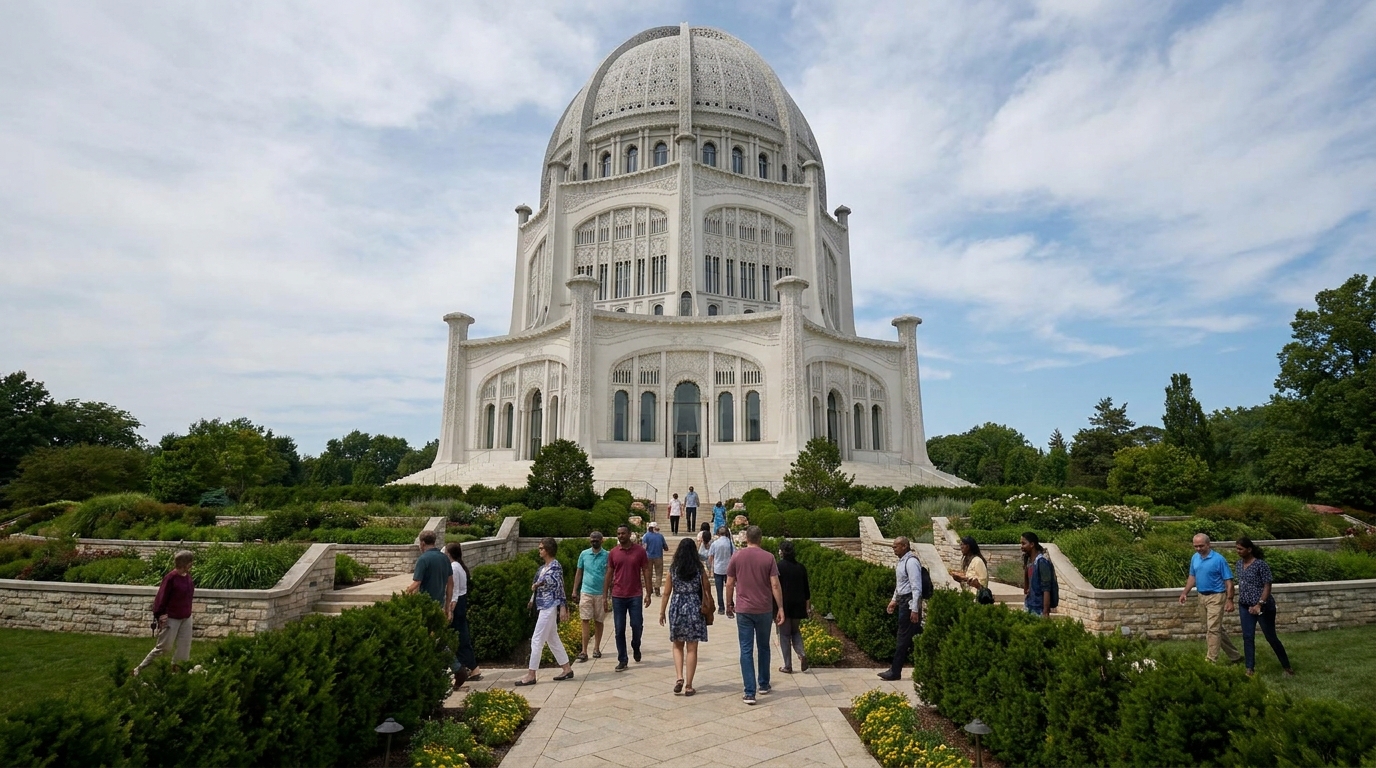
The Baháʼí Faith has established a unique system of governance that reflects its principles of consultation, consultation, and the avoidance of partisan politics and clergy. This administrative order is designed to guide the Baháʼí community and to implement the teachings of Baháʼu’lláh in a practical manner. We find this system to be an innovative approach to community building.
The Universal House of Justice
The highest governing body of the Baháʼí Faith is the Universal House of Justice. Its members are elected by the delegates to the International Baháʼí Convention, which convenes every five years. The Universal House of Justice is responsible for the interpretation of Baháʼu’lláh’s writings and the direction of the global Baháʼí community.
Guiding the Global Community
We understand the Universal House of Justice as the supreme authority in matters of Baháʼí law and administration. It provides guidance on a vast array of issues, from spiritual development and community life to social and economic development projects undertaken by Baháʼís around the world.
No Clergy
A defining characteristic of the Baháʼí Faith is its absence of a professional clergy. This means there are no priests, imams, or rabbis who mediate between God and the people. Spiritual guidance is derived from the sacred texts and the elected institutions.
Local and National Spiritual Assemblies
At the local and national levels, Baháʼís elect Local Spiritual Assemblies and National Spiritual Assemblies, respectively. These bodies are responsible for administering Baháʼí affairs within their geographical areas, promoting the teachings, and fostering the spiritual and administrative well-being of the local and national communities.
Elected, Not Appointed
The members of these Assemblies are elected annually by the adult Baháʼís in their respective communities. The election process is characterized by prayer, reflection, and a spirit of selfless service, with no campaigning or nominations.
Consultation as a Cornerstone
The principle of consultation (Shura) is central to the functioning of all Baháʼí institutions. It is a process of collective deliberation where all members are encouraged to express their views respectfully, aiming to arrive at decisions that are in the best interest of the community.
The Bahá’í Faith emphasizes the importance of prayer as a means of connecting with the divine and fostering spiritual growth. For those interested in exploring this aspect further, a related article on occasional prayers can be found at this link, which provides insights into the various prayers that Bahá’ís use in their daily lives. Engaging with these prayers can deepen one’s understanding of the faith and enhance personal devotion.
Baháʼí Life: Practices and Community
| Metrics |
Data |
| Number of followers |
5-7 million |
| Founded by |
Baha’u’llah |
| Location of origin |
Persia (modern-day Iran) |
| Sacred texts |
Kitáb-i-Aqdas, Kitáb-i-Íqán, Hidden Words, etc. |
| Central figures |
Báb, `Abdu’l-Bahá |
The Baháʼí Faith is not just a set of beliefs; it is a way of life. Baháʼís are called to actively embody its principles in their daily lives and to contribute to the betterment of society. We find the emphasis on active participation and continuous learning to be inspiring.
Daily Devotional Life
Baháʼís are encouraged to engage in daily prayer and meditation. This personal communion with God is seen as essential for spiritual growth and for cultivating a connection to the Divine.
Obligatory Prayers
There are specific obligatory prayers that Baháʼís are encouraged to recite daily, tailored to different times of the day. These prayers serve as a reminder of one’s relationship with God and a means of seeking spiritual strength and guidance.
Meditation and Reflection
Beyond obligatory prayers, Baháʼís are encouraged to engage in meditation and reflection, deepening their understanding of spiritual truths and cultivating inner peace.
The Nineteen Day Feast
A unique feature of Baháʼí community life is the Nineteen Day Feast. Held every nineteen months, this gathering serves as a time for fellowship, consultation on community matters, and spiritual devotion.
Fellowship and Consultation
The Feast is a vital occasion for Baháʼís to connect with one another, strengthen their bonds of friendship, and engage in consultative decision-making concerning local community affairs.
Spiritual Enrichment
The Feast often includes readings from Baháʼí scripture, prayers, and uplifting music, providing a space for spiritual reflection and renewal.
Community Activities and Service
Baháʼís are actively involved in a wide range of community activities aimed at fostering spiritual and social progress.
Children’s Classes
Baháʼí communities worldwide offer classes for children focused on teaching spiritual and moral principles, fostering virtues such as kindness, honesty, and generosity.
Junior Youth Spiritual Empowerment Program
This program aims to empower young adolescents through activities that build their capacity for spiritual and ethical decision-making, helping them navigate the challenges of adolescence.
Study Circles
Baháʼís engage in study circles where they explore the Baháʼí teachings in depth, fostering a deeper understanding of the Faith and its implications for individual and collective life.
Service to Humanity
A central tenet of the Baháʼí Faith is the importance of service to humanity. Baháʼís are encouraged to engage in activities that promote social justice, eradicate poverty, advance education, and protect the environment.
The Baháʼí Vision for the Future
The Baháʼí Faith offers a hopeful and inspiring vision for the future of humanity, one characterized by global unity, peace, and justice. We see this vision as a powerful antidote to the cynicism and despair that can sometimes pervade our world.
The Most Great Peace
Central to Baháʼu’lláh’s teachings is the promise of the Most Great Peace. This is not simply an absence of war, but a comprehensive and lasting peace established upon the foundation of justice, understanding, and the recognition of humanity’s oneness.
A New World Order
Baháʼís believe that the current global system is inadequate to address the world’s challenges and that a new world order is necessary. This order will be characterized by universal participation in governance, the elimination of extreme poverty and wealth, and a unified approach to global problems.
The Advancement of Civilization
The Baháʼí Faith teaches that humanity is progressing towards a state of maturity, and that the realization of the Most Great Peace will mark a significant advancement in the evolution of civilization.
The Role of Education and Science
The Baháʼí Faith places great emphasis on the role of education and science in human progress. It sees them as essential tools for understanding the world, eradicating ignorance, and building a better future.
The Harmony of Science and Religion
Baháʼís believe that true religion and science are not in conflict but are complementary paths to understanding truth. Religion provides the moral and spiritual framework, while science provides the knowledge and understanding of the material world.
Universal Education for All
As mentioned earlier, the Baháʼí Faith champions universal education as a fundamental human right and a critical component of social progress.
A United Global Commonwealth
The ultimate vision of the Baháʼí Faith is the establishment of a united global commonwealth, a world federation where nations have learned to live in harmony, working together for the common good.
World Governance
This future envisions a form of world governance that respects national sovereignty while facilitating cooperation on global issues. It is a vision of a world united not by force, but by shared values and a common purpose.
A Peaceful and Prosperous World
The Baháʼí Faith offers a profound and transformative message of hope and unity. By exploring its core principles, its history, and its administrative system, we gain a deeper appreciation for its potential to inspire individuals and shape a more just, peaceful, and unified world for generations to come. We encourage continued exploration and engagement with the Baháʼí Faith’s timeless teachings.
FAQs
What is the Bahá’í religion?
The Bahá’í religion is a monotheistic faith that emphasizes the spiritual unity of all humankind. It was founded in the 19th century in Persia by Bahá’u’lláh, who is considered by Bahá’ís to be the latest in a line of prophets including Abraham, Moses, Buddha, Jesus, and Muhammad.
What are the core beliefs of the Bahá’í religion?
The Bahá’í religion teaches the oneness of God, the oneness of religion, and the oneness of humanity. It emphasizes the importance of unity, equality, and justice, and promotes the elimination of prejudice and the harmony of science and religion.
What are the key practices of the Bahá’í religion?
Bahá’í practices include daily prayer and meditation, participation in community activities and service projects, and adherence to moral and ethical principles. Bahá’ís also observe a number of holy days and celebrate the birthdays of the founders of their faith.
How is the Bahá’í religion organized?
The Bahá’í religion has a unique administrative structure that includes elected councils at the local, national, and international levels. The Universal House of Justice, based in Haifa, Israel, is the supreme governing body of the Bahá’í faith.
What is the global reach of the Bahá’í religion?
The Bahá’í religion has a presence in virtually every country in the world, with an estimated 5-7 million followers. Bahá’ís are actively involved in efforts to promote peace, social justice, and the advancement of women and children.